Designed by Albert R. Walker and Percy A. Eisen, the richly embellished Romanesque facade of the Fine Arts Building on Flower and 7th was accented with the architectural sculptures of Burt Johnson and the legendary tiles of Ernest Batchelder in 1906.
Two colossal designers of their time, under their artistic wings they completed a perfect castle of terra-cotta with a majestic atmosphere inside and a stunning monument to history outside – The giants, Architecture and Sculpture; are two nude men relaxing on the third story ledge, reminding the public of the Fine Arts Building’s original purpose.
Originally constructed for use as artist studios, artisan workshops and dealer showrooms in the lobby, the building was constructed in an age when sculpture was integrated into the architecture as a way of expressing the meaning and purpose of the building.
In 1926 the Los Angeles Times wrote, “The Fine Arts Building is a tribute to the awakening interest in art among Southern California residents and organizations.”
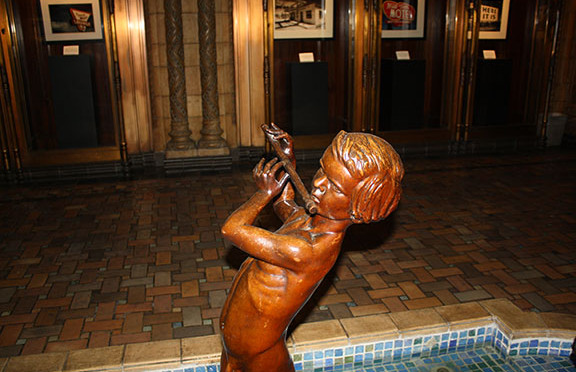 On this day, the Fine Arts Tower is fully restored all the way down to its newly repaired signature fountain. Its original glass cases hold the works of artist/ photographer Mark Peacock’s exhibit, Route 66 – Americas Historic Highway.
From Chicago in the 1920’s moving west thorough California, Route 66 was the main east-west thoroughfare. To this day one can find roadside architecture, novelty attractions, motels and fueling stations that have become a part of the American Highway.
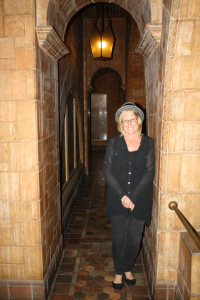 In conjunction with this month’s Women of Art Art Walk Theme on March 13th, Lisa Ames of Art Meets Architecture will curate Caryl M. Christian Levy.
Caryl M. Christian Levy is completing her artist in residency for The Venice Printmaking Studio International Workshop in Italy this February, and returning just in time to begin her next big solo exhibition; Monotypes: The Vestment Series, at the Historical Cultural Monument of The Fine Arts Building on March 13, 2014.
Art Meets Architecture believes art is enhanced by context and when set within architecture has historical precedent and an intimate relationship with human experience. In the same way that a frame changes the way we view a piece, the space in which the viewer stands also affects the experience. 811 W. 7th St., Los Angeles. 213-489-4054. FMI: http://www.artmeetsarchitecture.com